List

Audience
Category
Claire McCardell

Claire McCardell

Elizabeth Evitts Dickinson

Description

Named one of The New York Times’s 100 Notable Books of 2025

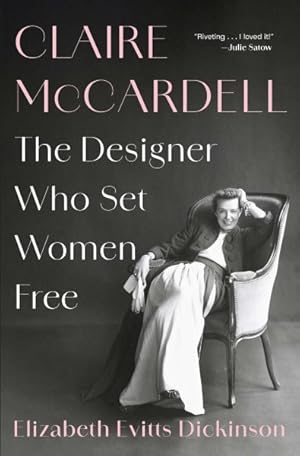
The riveting hidden history of Claire McCardell, the most influential fashion designer you’ve never heard of. 

Claire McCardell forever changed fashion—and most importantly, the lives of women. She shattered cultural norms around women’s clothes, and today much of what we wear traces back to her ingenious, rebellious mind. McCardell invented ballet flats and mix-and-match separates, and she introduced wrap dresses, hoodies, leggings, denim, and more into womenswear. She tossed out corsets in favor of a comfortably elegant look and insisted on pockets, even as male designers didn’t see a need for them. She made zippers easy to reach because a woman “may live alone and like it,” McCardell once wrote, “but you may regret it if you wrench your arm trying to zip a back zipper into place.”

After World War II, McCardell fought the severe, hyper-feminized silhouette championed by male designers, like Christian Dior. Dior claimed that he wanted to “save women from nature.” McCardell, by contrast, wanted to set women free. Claire McCardell became, as the young journalist Betty Friedan called her in 1955, “The Gal Who Defied Dior.” 

Filled with personal drama and industry secrets, this story reveals how Claire McCardell built an empire at a time when women rarely made the upper echelons of business. At its core, hers is a story about our right to choose how we dress—and our right to choose how we live.
View Details
counterfeit countess

The Counterfeit Countess

Elizabeth B. White

Description

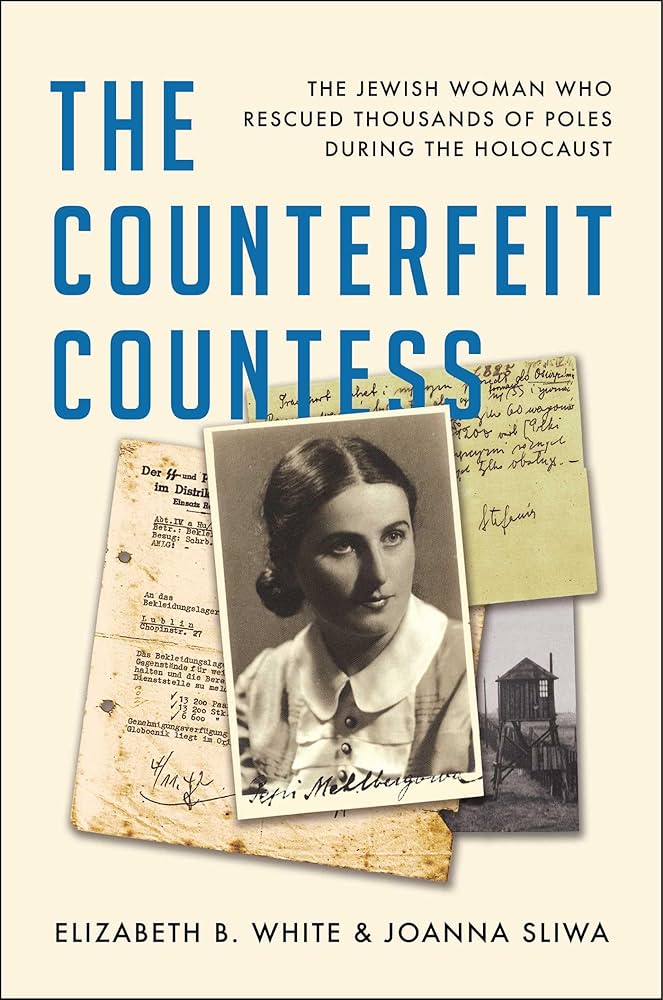
The “remarkable…inspiring” (The Wall Street Journal) true story of Dr. Josephine Janina Mehlberg—a Jewish mathematician who saved thousands of lives in Nazi-occupied Poland by masquerading as a Polish aristocrat—drawing on Mehlberg’s own unpublished memoir.

World War II and the Holocaust have given rise to many stories of resistance and rescue, but The Counterfeit Countess is unique. It tells the astonishing unknown story of “Countess Janina Suchodolska,” a Jewish woman who rescued more than 10,000 Poles imprisoned by Poland’s Nazi occupiers, becoming “a heroine for the ages” (Larry Loftis, author of The Watchmaker’s Daughter).

Mehlberg operated in Lublin, Poland, headquarters of Aktion Reinhard, the SS operation that murdered 1.7 million Jews in occupied Poland. Using the identity papers of a Polish aristocrat, she worked as a welfare official while also serving in the Polish resistance. With guile, cajolery, and steely persistence, the “Countess” persuaded SS officials to release thousands of Poles from the Majdanek concentration camp. She won permission to deliver food and medicine—even decorated Christmas trees—for thousands more of the camp’s prisoners. At the same time, she personally smuggled supplies and messages to resistance fighters imprisoned in Majdanek, where 63,000 Jews were murdered in gas chambers and shooting pits. Incredibly, she eluded detection, and ultimately survived the war and emigrated to the US.

Drawing on the manuscript of Mehlberg’s own unpublished memoir supplemented with prodigious research, Elizabeth White and Joanna Sliwa, professional historians and Holocaust experts, have uncovered the full story of this remarkable woman. They interweave Mehlberg’s sometimes harrowing personal testimony with broader historical narrative. Like The Light of Days, Schindler’s List, and Irena’s Children, The Counterfeit Countess is a “riveting…stunning” (Debbie Cenziper, Pulitzer Prize–winning journalist and author of Citizen 865) account of inspiring courage in the face of unspeakable cruelty.

View Details
"The Westerners" by Megan Kate Nelson

The Westerners

Megan Kate Nelson

Description

From award-winning historian Megan Kate Nelson, an epic account of the creation of the American West in the 19th century, shattering the traditional frontier myth that has dominated popular American culture.

The Westerners tells two richly detailed and interwoven stories. The first reveals the captivating lives of women and men moving through the American West—Indigenous peoples, Black Americans, Mexican Americans, and Canadian and Asian immigrants—in the 19th century. The second tracks the attempts of many Americans to erase these westerners from history, through a frontier myth that lionized individualism and conquest and celebrated white settlers traveling west in search of prosperity.

Nelson’s vivid, eye-opening account centers on seven extraordinary individuals whose lives capture the true history of the frontier: Sacajawea, not just Lewis and Clark’s guide but an explorer who forged her own path; Jim Beckwourth, a biracial fur trader whose sharp cultural insight made him indispensable; María Gertrudis Barceló, a Hispana gambling saloon owner who broke every stereotype to become the wealthiest woman in Santa Fe; Ovando Hollister, a gold miner, soldier, and newspaper man who championed Western expansion; Little Wolf, a Northern Cheyenne chief whose courageous leadership secured his people’s future; Canadian immigrant Ella Watson, who strove to become a ranch woman in a male-dominated world; and the defiant Polly Bemis, a Chinese immigrant who carved out a life in Idaho despite federal expulsion efforts.

Nelson roots this bold new history of the American West in the deep research and gripping storytelling that have garnered her critical acclaim. Highlighting the perseverance and ingenuity of the communities that have otherwise been forgotten or erased from history, The Westerners challenges us to reimagine who we are and where we came from.

View Details
jane austen's bookshelf

Jane Austen's Bookshelf

Rebecca Romney

Description

From rare book dealer and guest star of the hit show Pawn Stars, a page-turning literary adventure featuring “your favorite author’s favorite authors” (Today)—the women who inspired Jane Austen—that’s “a meditation on reading and writing, on honesty and self-discovery—and on what books can teach us, if we let them” (The Washington Post).

Long before she was a rare book dealer, Rebecca Romney was a devoted reader of Jane Austen. She loved that Austen’s books took the lives of women seriously, explored relationships with wit and confidence, and always, allowed for the possibility of a happy ending. She read and reread them, often wishing Austen wrote just one more.

But Austen wasn’t a lone genius. She wrote at a time of great experimentation for women writers—and clues about those women, and the exceptional books they wrote, are sprinkled like breadcrumbs throughout Austen’s work. Every character in Northanger Abbey who isn’t a boor sings the praises of Ann Radcliffe. The play that causes such a stir in Mansfield Park is a real one by the playwright Elizabeth Inchbald. In fact, the phrase “pride and prejudice” came from Frances Burney’s second novel Cecilia. The women that populated Jane Austen’s bookshelf profoundly influenced her work; Austen looked up to them, passionately discussed their books with her friends, and used an appreciation of their books as a litmus test for whether someone had good taste. So where had these women gone? Why hadn’t Romney—despite her training—ever read them? Or, in some cases, even heard of them? And why were they no longer embraced as part of the wider literary canon?

Jane Austen’s Bookshelf investigates the disappearance of Austen’s heroes—women writers who were erased from the Western canon—to reveal who they were, what they meant to Austen, and how they were forgotten. Each chapter profiles a different writer including Frances Burney, Ann Radcliffe, Charlotte Lennox, Charlotte Smith, Hannah More, Elizabeth Inchbald, Hester Lynch Thrale Piozzi, and Maria Edgeworth—and recounts Romney’s experience reading them, finding rare copies of their works, and drawing on connections between their words and Austen’s. Romney collects the once-famed works of these forgotten writers, physically recreating Austen’s bookshelf and making a convincing case for why these books should be placed back on the to-be-read pile of all book lovers today. Jane Austen’s Bookshelf will encourage you to look beyond assigned reading lists, question who decides what belongs there, and build your very own collection of favorite novels.

View Details
access

Access

Rebecca Grant

Description

From the award-winning author of Birth, a journey into the underground activist networks that have been working to protect women’s autonomy over their bodies amidst legal, political, religious, and cultural oppression over the past sixty years.

In this definitive, eye-opening history, award-winning author Rebecca Grant charts the reproductive freedom movement from the days before Roe through the seismic impact of Dobbs. The stories in Access span four continents, tracing strategies across generations and borders. Grant centers those activists who have been engaged in direct action to help people get the abortions they need. Their efforts involve no small measure of daring-do, spy craft, sea adventures, close calls, undercover operations, smuggling, sequins, legal dramas, victories, defeats, and above all, a deeply held conviction that all the risks are worth it for the cause.

In Access, we meet a cast of brave, bold, and unforgettable women: the founders of the Jane Collective, a group of anonymous providers working clandestinely between Chicago apartments to perform abortions in the pre-Roe years; the originators and leaders of the abortion fund movement; Verónica Cruz Sánchez, a Mexican activist who works to support self-managed abortion with pills and fights to free women targeted by the criminalization of abortion; and Rebecca Gomperts, a Dutch doctor who realizes that there is one place abortion bans cannot reach: international waters. 

Post-Dobbs, activist groups have once again stepped up and put themselves on the line to resist. Building on the work of their feminist forebearers and international allies, they are charting new pathways for access in the face of unprecedented acts to subjugate and control half of America’s population. Working above ground, underground, and in legal gray areas, they’ve helped people travel across state lines for care, established telehealth practices, and formed community networks to distribute pills for free to people who needed them.

Drawing on expert research and investigative reporting, told with deep compassion and humanity by a journalist who has spent her career on the frontlines of the fight, Access celebrates the bravery, ingenuity, and determination of women across decades who have fought for a fundamental human right—and serves as an inspiring rallying cry for the work that lies ahead.

View Details
joy goddess

Joy Goddess

A'Lelia Bundles

Description

“Raucously immersive...An intimate portrait of Black opulence in the early 20th century.” —Oprah Daily

A “scintillating, vibrant” (Publishers Weekly, starred review) and deeply researched biography of A’Lelia Walker—daughter of Madam C.J. Walker and herself a central figure of the Harlem Renaissance—written by her great-granddaughter.

Dubbed the “joy goddess of Harlem’s 1920s” by poet Langston Hughes, A’Lelia Walker was a dazzling cultural icon whose legendary parties and Dark Tower salon helped define the Harlem cultural scene.

After inheriting her mother’s pioneering hair care business, A’Lelia became America’s first high-profile Black heiress and a patron of the arts. Joy Goddess takes readers inside her New York homes, where she hosted luminaries including Langston Hughes, Zora Neale Hurston, Paul Robeson, Florence Mills, James Weldon Johnson, Carl Van Vechten, and W.E.B. Du Bois—figures who shaped African American history and culture during the Roaring Twenties.

Drawing on extensive research and personal correspondence, A’Lelia Bundles presents a nuanced biography of a woman navigating life as a wife, mother, businesswoman, and patron outside the shadow of her famous mother’s legacy.

With vivid detail, Joy Goddess brings to life A’Lelia’s radiant personality, fashion-forward influence, and role as one of the most important cultural icons of Harlem, offering a fresh and unforgettable portrait of the woman who embodied the spirit of a new Black cultural era.

View Details
spell freedom

Spell Freedom

Elaine Weiss

Description

Spell Freedom draws us in with lucid prose, filling in the holes of American history with the work of Septima Clark and Bernice Robinson and their compatriots, who deftly wielded reading and writing as their weapons of choice in the 20th century fight for first class citizenship for all.” —Margot Lee Shetterly, bestselling author of Hidden Figures

The acclaimed author of the “stirring, definitive, and engrossing” (NPR) The Woman’s Hour returns with the story of four activists whose audacious plan to restore voting rights to Black Americans laid the groundwork for the Civil Rights Movement.

In the summer of 1954, educator Septima Clark and small businessman Esau Jenkins travelled to rural Tennessee’s Highlander Folk School, an interracial training center for social change founded by Myles Horton, a white southerner with roots in the labor movement. There, the trio united behind a shared mission: preparing Black southerners to pass the daunting Jim Crow era voter registration literacy tests that were designed to disenfranchise them.

Together with beautician-turned-teacher Bernice Robinson, they launched the underground Citizenship Schools project, which began with a single makeshift classroom hidden in the back of a rural grocery store. By the time the Voting Rights Act was signed into law in 1965, the secretive undertaking had established more than nine hundred citizenship schools across the South, preparing tens of thousands of Black citizens to read and write, demand their rights—and vote. Simultaneously, it nurtured a generation of activists—many of them women—trained in community organizing, political citizenship, and tactics of resistance and struggle who became the grassroots foundation of the Civil Rights Movement. Dr. King called Septima Clark, “Mother of the Movement.”

In the vein of Hidden Figures and Devil in the Grove, Spell Freedom is both a riveting, crucially important lens onto our past, and a deeply moving story for our present.

View Details
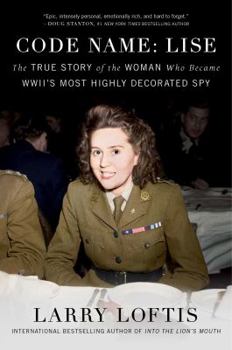
code name lise

Code Name: Lise

Larry Loftis

Description

NATIONAL BESTSELLER
Featured in The New York Times, The Atlantic, Time, New York Newsday, and on Today!
“A nonfiction thriller.”—The Wall Street Journal

From New York Times and international bestselling author of the “gripping” (Michael Connelly, #1 New York Times bestselling author) Into the Lion’s Mouth comes the extraordinary true story of Odette Sansom, the British spy who operated in occupied France and fell in love with her commanding officer during World War II—perfect for fans of Unbroken, The Nightingale, and Code Girls

The year is 1942, and World War II is in full swing. Odette Sansom decides to follow in her war hero father’s footsteps by becoming an SOE agent to aid Britain and her beloved homeland, France. Five failed attempts and one plane crash later, she finally lands in occupied France to begin her mission. It is here that she meets her commanding officer Captain Peter Churchill.

As they successfully complete mission after mission, Peter and Odette fall in love. All the while, they are being hunted by the cunning German secret police sergeant, Hugo Bleicher, who finally succeeds in capturing them. They are sent to Paris’s Fresnes prison, and from there to concentration camps in Germany where they are starved, beaten, and tortured. But in the face of despair, they never give up hope, their love for each other, or the whereabouts of their colleagues.

In Code Name: Lise, Larry Loftis paints a portrait of true courage, patriotism, and love—of two incredibly heroic people who endured unimaginable horrors and degradations. He seamlessly weaves together the touching romance between Odette and Peter and the thrilling cat and mouse game between them and Sergeant Bleicher. With this amazing testament to the human spirit, Loftis proves once again that he is adept at writing “nonfiction that reads like a page-turning novel” (Parade).

View Details
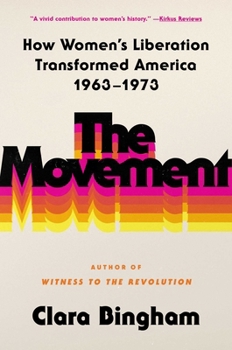
the movement

The Movement

Clara Bingham

Description

A comprehensive and engaging oral history of the decade that defined the feminist movement, including interviews with living icons and unsung heroes—from former Newsweek reporter and author of the “powerful and moving” (The New York Times) Witness to the Revolution.

For lovers of both Barbie and Gloria Steinem, The Movement is the first oral history of the decade that built the modern feminist movement. Through the captivating individual voices of the people who lived it, The Movement tells the intimate inside story of what it felt like to be at the forefront of the modern feminist crusade, when women rejected thousands of years of custom and demanded the freedom to be who they wanted and needed to be.

This engaging history traces women’s awakening, organizing, and agitating between the years of 1963 and 1973, when a decentralized collection of people and events coalesced to create a spontaneous combustion. From Betty Friedan’s The Feminine Mystique, to the underground abortion network the Janes, to Shirley Chisholm’s presidential campaign and Billie Jean King’s 1973 battle of the sexes, Bingham artfully weaves together the fragments of that explosion person by person, bringing to life the emotions of this personal, cultural, and political revolution. Artists and politicians, athletes and lawyers, Black and white, The Movement brings readers into the rooms where these women insisted on being treated as first class citizens, and in the process, changed the fabric of American life.

View Details
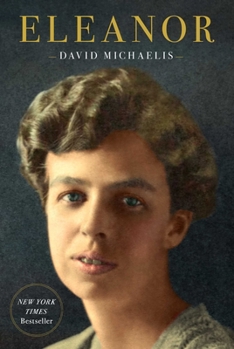
eleanor

Eleanor

David Michaelis

Description

The New York Times bestseller from prizewinning author David Michaelis presents a “stunning” (The Wall Street Journal) breakthrough portrait of Eleanor Roosevelt, America’s longest-serving First Lady, an avatar of democracy whose ever-expanding agency as diplomat, activist, and humanitarian made her one of the world’s most widely admired and influential women.

In the first single-volume cradle-to-grave portrait in six decades, acclaimed biographer David Michaelis delivers a stunning account of Eleanor Roosevelt’s remarkable life of transformation. An orphaned niece of President Theodore Roosevelt, she converted her Gilded Age childhood of denial and secrecy into an irreconcilable marriage with her ambitious fifth cousin Franklin. Despite their inability to make each other happy, Franklin Roosevelt transformed Eleanor from a settlement house volunteer on New York’s Lower East Side into a matching partner in New York’s most important power couple in a generation.

When Eleanor discovered Franklin’s betrayal with her younger, prettier, social secretary, Lucy Mercer, she offered a divorce and vowed to face herself honestly. Here is an Eleanor both more vulnerable and more aggressive, more psychologically aware and sexually adaptable than we knew. She came to accept her FDR’s bond with his executive assistant, Missy LeHand; she allowed her children to live their own lives, as she never could; and she explored her sexual attraction to women, among them a star female reporter on FDR’s first presidential campaign, and younger men.

Eleanor needed emotional connection. She pursued deeper relationships wherever she could find them. Throughout her life and travels, there was always another person or place she wanted to heal. As FDR struggled to recover from polio, Eleanor became a voice for the voiceless, her husband’s proxy in the White House. Later, she would be the architect of international human rights and world citizen of the Atomic Age, urging Americans to cope with the anxiety of global annihilation by cultivating a “world mind.” She insisted that we cannot live for ourselves alone but must learn to live together or we will die together.

This “absolutely spellbinding,” (The Washington Post) “complex and sensitive portrait” (The Guardian) is not just a comprehensive biography of a major American figure, but the story of an American ideal: how our freedom is always a choice. Eleanor rediscovers a model of what is noble and evergreen in the American character, a model we need today more than ever.

View Details
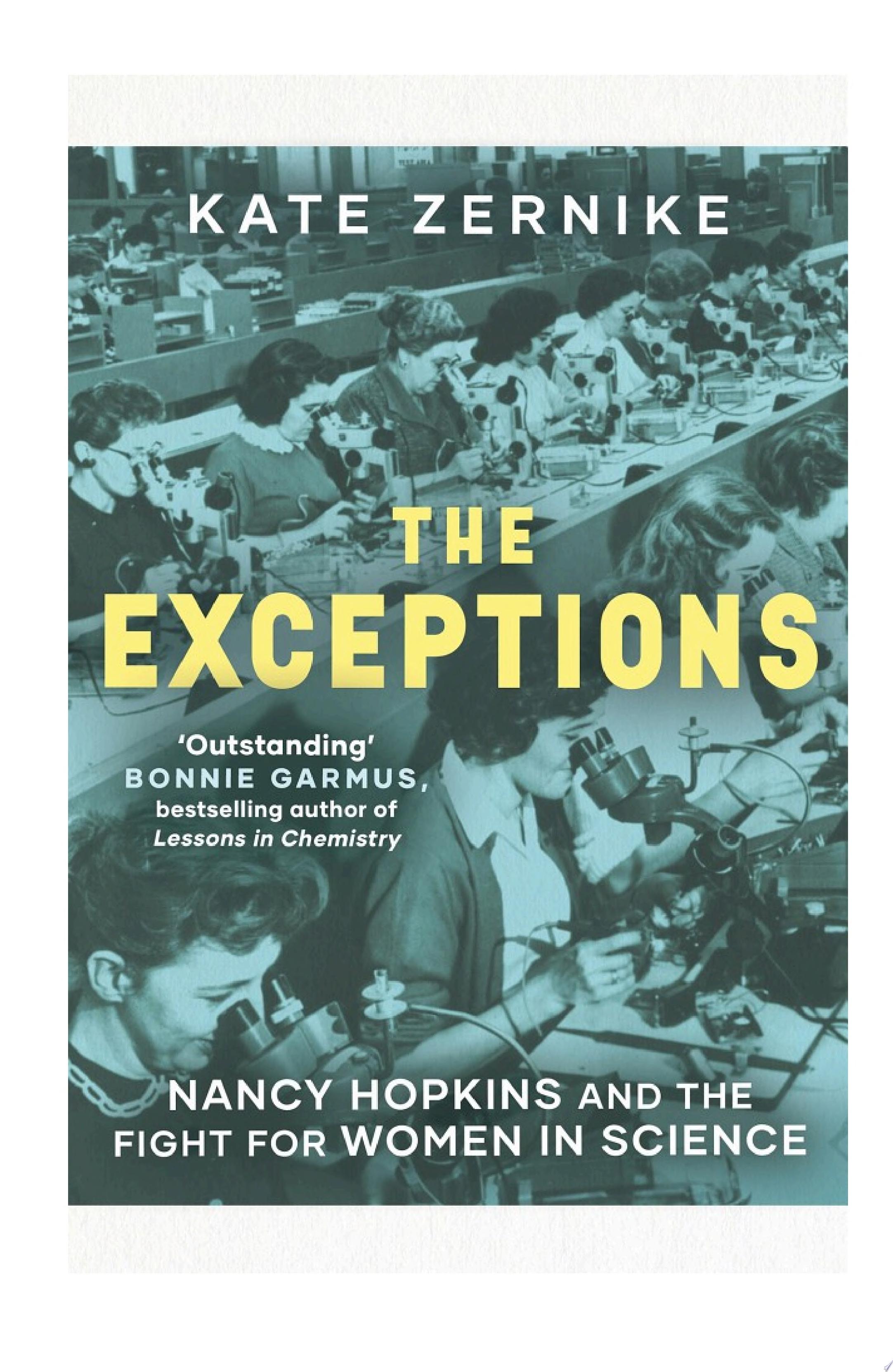
"The Exceptions" by Kate Zernike

The Exceptions

Kate Zernike

Description

‘Outstanding’ Bonnie Garmus, bestselling author of Lessons in Chemistry

The remarkable untold story of how a group of sixteen determined women used the power of the collective and the tools of science to inspire ongoing radical change. This is a triumphant account of progress, whilst reminding us that further action is needed.

These women scientists entered the work force in the 1960s during a push for affirmative action. Embarking on their careers they thought that discrimination against women was a thing of the past and that science was a pure meritocracy. Women were marginalized and minimized, especially as they grew older, their contributions stolen and erased.

Written by the Pulitzer Prize-winning journalist who broke the story in 1999 for The Boston Globe, when the Massachusetts Institute of Technology made the astonishing admission that it discriminated against women on its faculty, The Exceptions is an intimate narrative which centres on Nancy Hopkins – a surprisingly reluctant feminist who became a hero to two generations of women in science.

In uncovering an erased history, we are finally introduced to the hidden scientists who paved the way for collective change.

View Details
howlong

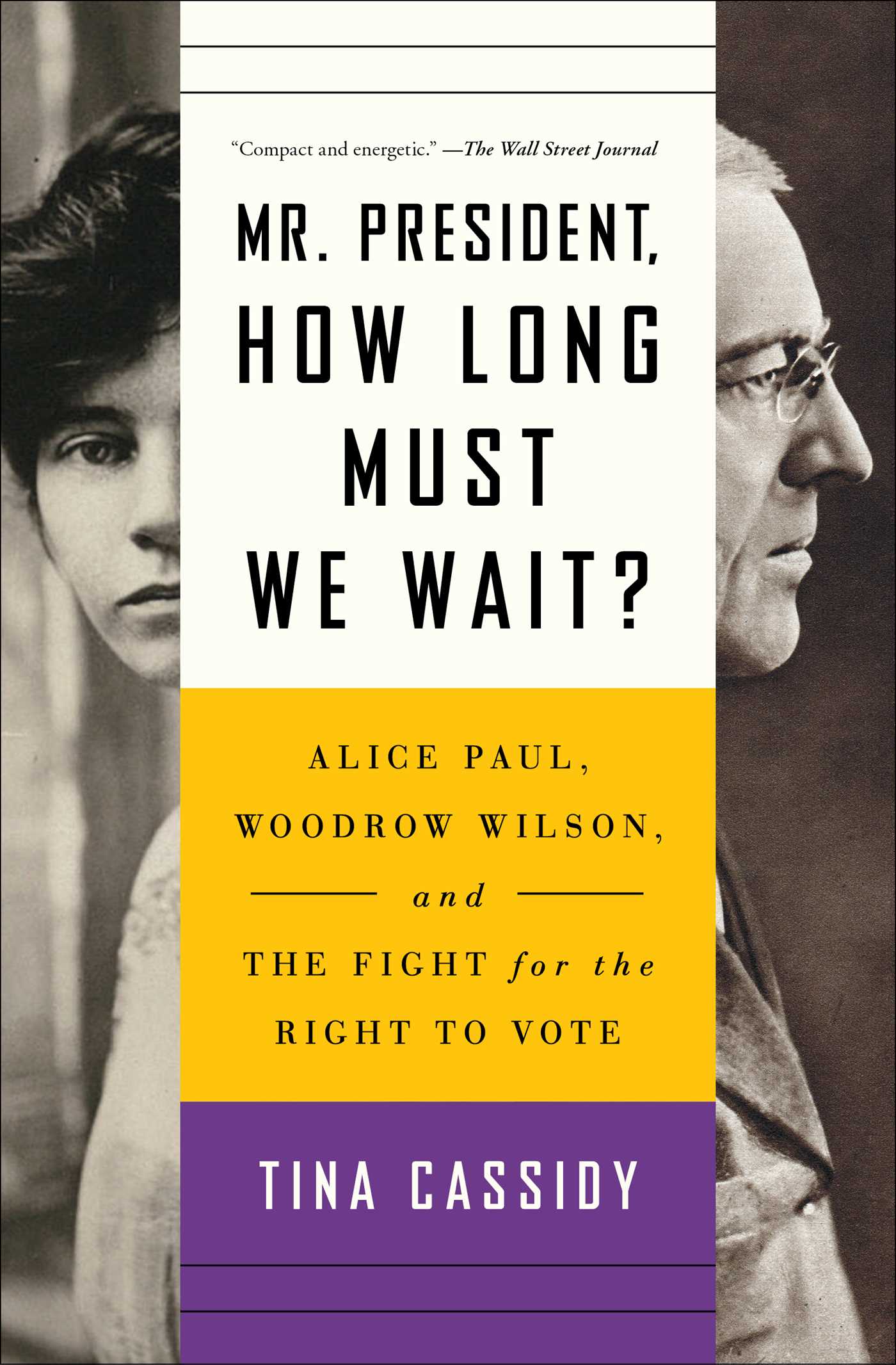
Mr. President, How Long Must We Wait?

Tina Cassidy

Description

In this “heroic narrative” (The Wall Street Journal), discover the inspiring and timely account of the complex relationship between leading suffragist Alice Paul and President Woodrow Wilson in her fight for women’s equality. 

Woodrow Wilson lands in Washington, DC, in March of 1913, a day before he is set to take the presidential oath of office. He is surprised by the modest turnout. The crowds and reporters are blocks away from Union Station, watching a parade of eight thousand suffragists on Pennsylvania Avenue in a first-of-its-kind protest organized by a twenty-five-year-old activist named Alice Paul. The next day, The New York Times calls the procession “one of the most impressively beautiful spectacles ever staged in this country.”

Mr. President, How Long Must We Wait? weaves together two storylines: the trajectories of Alice Paul and Woodrow Wilson, two apparent opposites. Paul’s procession of suffragists resulted in her being granted a face-to-face meeting with President Wilson, one that would lead to many meetings and much discussion, but little progress for women. With no equality in sight and patience wearing thin, Paul organized the first group to ever picket in front of the White House lawn—night and day, through sweltering summer mornings and frigid fall nights.

From solitary confinement, hunger strikes, and the psychiatric ward to ever more determined activism, Mr. President, How Long Must We Wait? reveals the courageous, near-death journey it took, spearheaded in no small part by Alice Paul’s leadership, to grant women the right to vote in America. “A remarkable tale” (Kirkus Reviews) and a rousing portrait of a little-known feminist heroine, this is an eye-opening exploration of a crucial moment in American history one century before the Women’s March.

View Details
suffrage

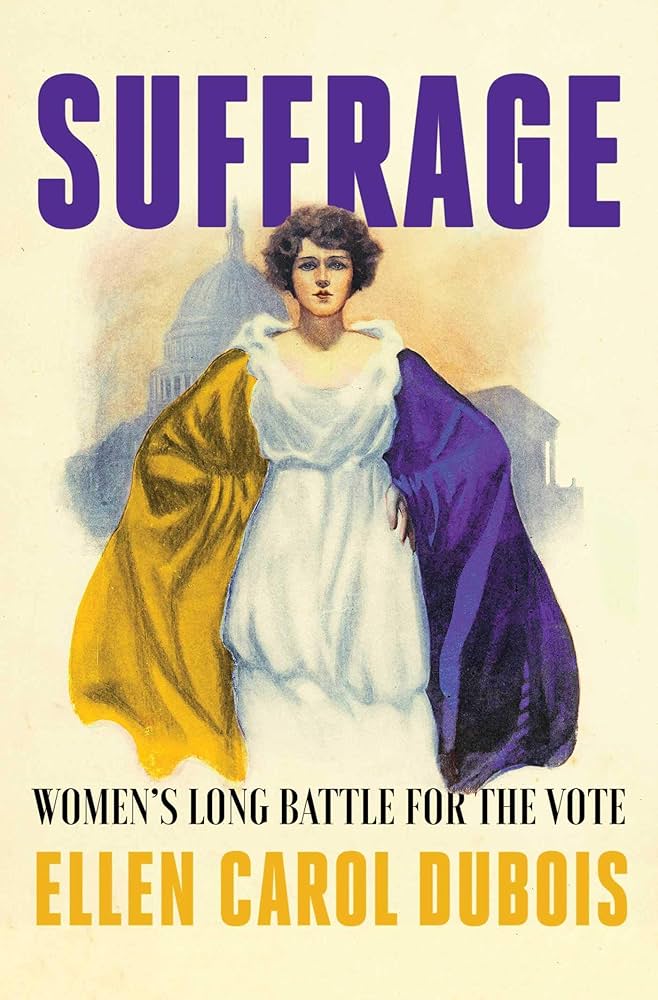
Suffrage

Ellen Carol DuBois

Description

Honoring the 100th anniversary of the 19th amendment to the Constitution, this “indispensable” book (Ellen Chesler, Ms. magazine) explores the full scope of the movement to win the vote for women through portraits of its bold leaders and devoted activists.

Distinguished historian Ellen Carol DuBois begins in the pre-Civil War years with foremothers Lucretia Mott, Elizabeth Cady Stanton, Susan B. Anthony, and Sojurner Truth as she “meticulously and vibrantly chronicles” (Booklist) the links of the woman suffrage movement to the abolition of slavery. After the Civil War, Congress granted freed African American men the right to vote but not white and African American women, a crushing disappointment. DuBois shows how suffrage leaders persevered through the Jim Crow years into the reform era of Progressivism. She introduces new champions Carrie Chapman Catt and Alice Paul, who brought the fight to the 20th century, and she shows how African American women, led by Ida B. Wells-Barnett, demanded voting rights even as white suffragists ignored them.

DuBois explains how suffragists built a determined coalition of moderate lobbyists and radical demonstrators in forging a strategy of winning voting rights in crucial states to set the stage for securing suffrage for all American women in the Constitution. In vivid prose, DuBois describes suffragists’ final victories in Congress and state legislatures, culminating in the last, most difficult ratification, in Tennessee.

“Ellen DuBois enables us to appreciate the drama of the long battle for women’s suffrage and the heroism of many of its advocates” (Eric Foner, author of The Second Founding: How the Civil War and Reconstruction Remade the Constitution). DuBois follows women’s efforts to use their voting rights to win political office, increase their voting strength, and pass laws banning child labor, ensuring maternal health, and securing greater equality for women.

Suffrage: Women’s Long Battle for the Vote is a “comprehensive history that deftly tackles intricate political complexities and conflicts and still somehow read with nail-biting suspense,” (The Guardian) and is sure to become the authoritative account of one of the great episodes in the history of American democracy.

View Details
theagitators

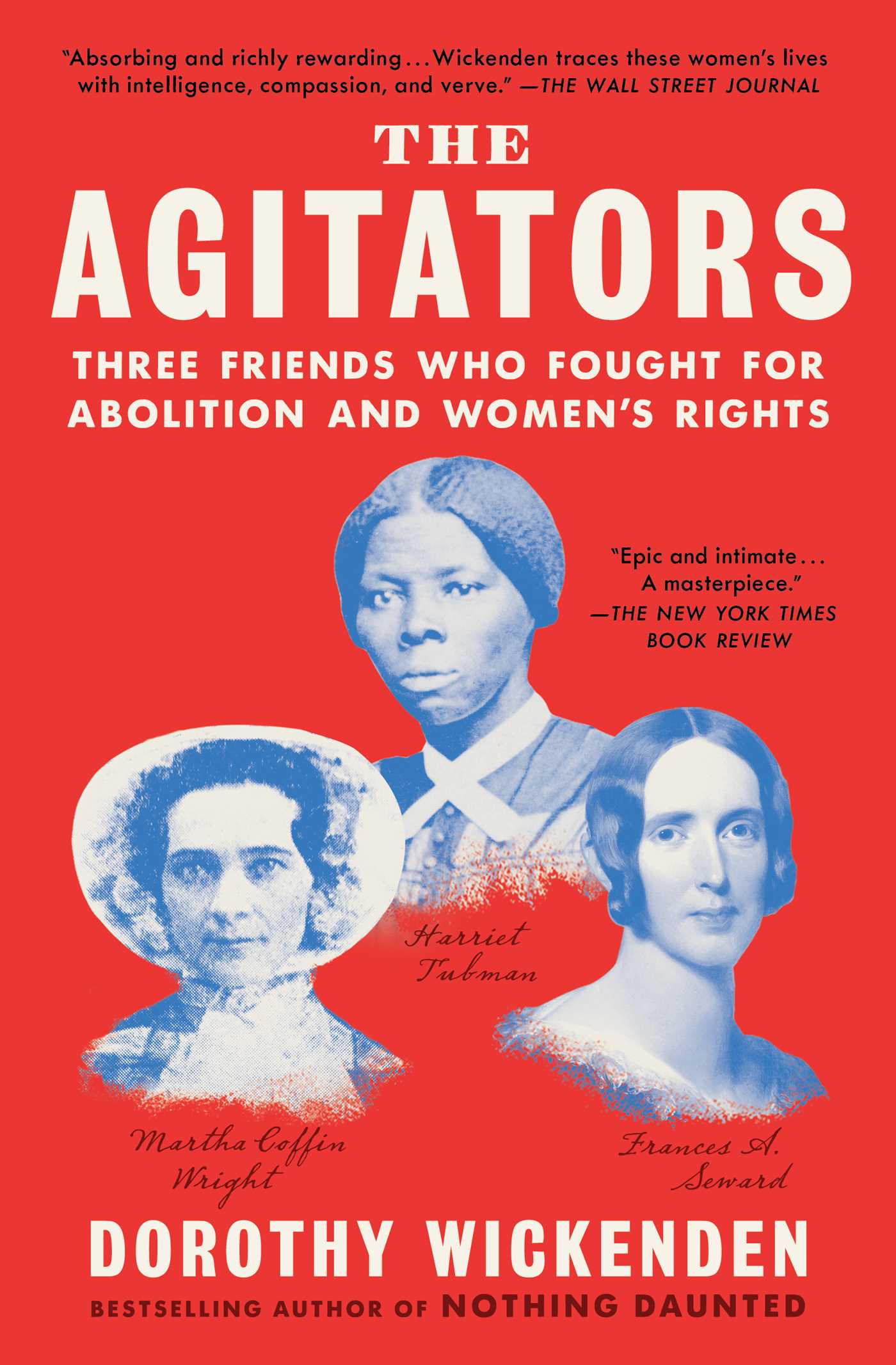
The Agitators

Dorothy Wickenden

Description

An LA Times Best Book of the Year, Christopher Award Winner, and Chautauqua Prize Finalist! 

“Engrossing... examines the major events of the mid 19th century through the lives of three key figures in the abolitionist and women’s rights movements.” —Smithsonian

From the executive editor of The New Yorker, a riveting, provocative, and revelatory history told through the story of three women—Harriet Tubman, Frances Seward, and Martha Wright—in the years before, during and after the Civil War.

In the 1850s, Harriet Tubman, strategically brilliant and uncannily prescient, rescued some seventy enslaved people from Maryland’s Eastern Shore and shepherded them north along the underground railroad. One of her regular stops was Auburn, New York, where she entrusted passengers to Martha Coffin Wright, a Quaker mother of seven, and Frances A. Seward, the wife of William H. Seward, who served over the years as governor, senator, and secretary of state under Abraham Lincoln. During the Civil War, Tubman worked for the Union Army in South Carolina as a nurse and spy, and took part in a spectacular river raid in which she helped to liberate 750 slaves from several rice plantations.

Wright, a “dangerous woman” in the eyes of her neighbors, worked side by side with Elizabeth Cady Stanton and Susan B. Anthony to organize women’s rights and anti-slavery conventions across New York State, braving hecklers and mobs when she spoke. Frances Seward, the most conventional of the three friends, hid her radicalism in public, while privately acting as a political adviser to her husband, pressing him to persuade President Lincoln to move immediately on emancipation.

The Agitators opens in the 1820s, when Tubman is enslaved and Wright and Seward are young homemakers bound by law and tradition, and ends after the war. Many of the most prominent figures of the era—Lincoln, William H. Seward, Frederick Douglass, Daniel Webster, Charles Sumner, John Brown, William Lloyd Garrison—are seen through the discerning eyes of the protagonists. So are the most explosive political debates: about the civil rights of African Americans and women, about the enlistment of Black troops, and about opposing interpretations of the Constitution.

Through richly detailed letters from the time and exhaustive research, Wickenden traces the second American revolution these women fought to bring about, the toll it took on their families, and its lasting effects on the country. Riveting and profoundly relevant to our own time, The Agitators brings a vibrant, original voice to this transformative period in our history.

View Details
thesix

The Six

Loren Grush

Description

“Vivid.” —The Guardian * “Engrossing.” —Booklist * “Suspenseful, meticulously observed, enlightening.” —Margot Lee Shetterly, #1 New York Times bestselling author of Hidden Figures

In this account of America’s first women astronauts “Grush skillfully weaves a story that, at its heart, is about desire: not a nation’s desire to conquer space, but the longing of six women to reach heights that were forbidden to them” (The New York Times).

When NASA sent astronauts to the moon in the 1960s and 1970s the agency excluded women from the corps, arguing that only military test pilots—a group then made up exclusively of men—had the right stuff. It was an era in which women were steered away from jobs in science and deemed unqualified for space flight. Eventually, though, NASA recognized its blunder and opened the application process to a wider array of hopefuls, regardless of race or gender. From a candidate pool of 8,000 six elite women were selected in 1978—Sally Ride, Judy Resnik, Anna Fisher, Kathy Sullivan, Shannon Lucid, and Rhea Seddon.

In The Six, acclaimed journalist Loren Grush shows these brilliant and courageous women enduring claustrophobic—and sometimes deeply sexist—media attention, undergoing rigorous survival training, and preparing for years to take multi-million-dollar payloads into orbit. Together, the Six helped build the tools that made the space program run. One of the group, Judy Resnik, sacrificed her life when the Space Shuttle Challenger exploded at 46,000 feet. Everyone knows of Sally Ride’s history-making first space ride, but each of the Six would make their mark. “A spirited group biography…it’s hard not to feel awe for these women” (The Wall Street Journal).

View Details